167.4K
Downloads
185
Episodes
Season Two - The Quest. With special focus on the evolving crises of the 21st century.
Season One - Psychotherapy: Jungian approach to healing.
Season Three - En Español: la Psicología Junguiana y la Crisis de Nuestro Tiempo.
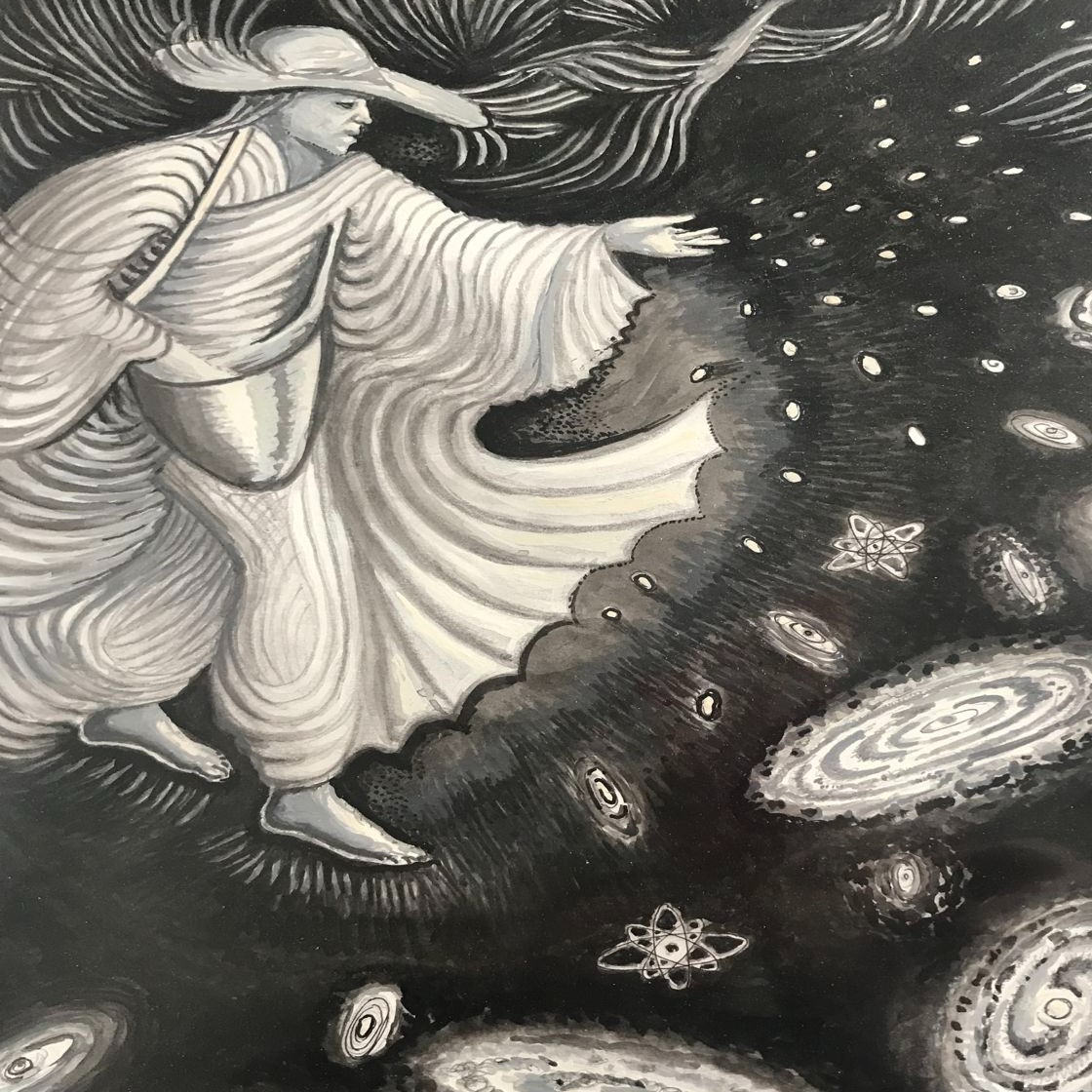
Banner illustration is by LINDSEY HARRIS, Jungian Analyst. It is the front cover of the book ”The Sower and the Seed”.
Music extracts at start and finish of episode from Beethoven’s 3rd symphony - creative commons.
Episodes
Dec 1, 2021
Dec 1, 2021
32 min
Este episodio examina al menos 15 puntos muy similares entre el taoísmo y la psicología junguiana, por ejemplo:
Para los taoístas la "acción por non-acción" es para el psicólogo profundo occidental la liberación interna del dominio cognitivo; la importancia de lo femenino en ambas tradiciones; la “circulación de la luz” le recordó a Jung el camino circular hacia el centro, el camino hacia el ser superior; el movimiento circular tiene también el significado de la auto-incubación; las referencias al lado más oscuro en terminología junguiana está cerca de la concepción de la sombra; la creencia taoísta de que se podía lograr un estado iluminador encontraría su equivalente en el concepto de Jung de la experiencia del Ser. Numerosas referencias al símbolo del mandala en el texto resuenan con la creciente fascinación de Jung por el símbolo del Self.
En el seguno parte del episodio examinamos el estado de taoísmo y otra religiones en la China moderna.
Nov 17, 2021
Nov 17, 2021
29 min
We begin by examining the impact of Taoism, especially with respect to the influence of the Taoist book the Secret of the Golden Flower upon Carl Jung and his school of Analytical Psychology.
We continue by considering modern China with a focus on Taoism which is one of its indigenous religions. What happens in this country is of immense importance not only for its size (over 1/6th of the world population) but also because of its growing importance.
Nov 1, 2021
Nov 1, 2021
28 min
El texto de El Secreto de la Flor de Oro dice que “solo a través de la contemplación y la tranquilidad surge la verdadera intuición: por eso el método de retroceso es necesario … al concentrar los pensamientos a través de la circulación de la luz, se puede volar; al concentrar los deseos, uno cae … el cuerpo como la madera seca, el corazón como las cenizas enfriadas".
El texto refiere al proceso de circulatio y distillatio, como alquimia, uniendo los opuestos, creando la coniunctio, la unión de los opuestos, el niño divino, la psique transformada. El corazón celestial se eleva a la cumbre de lo creativo, donde se expande en completa libertad.
Jung quiere hacer que los oscuros conceptos orientales de El Secreto de la Flor de Oro sean más accesibles e intenta mostrar su similitud con unos conceptos en Occidente, especialmente de su propia escuela de psicología que ofrece una puente de comprensión entre Occidente y Oriente
“El centro de gravedad de la personalidad cambia su posición. Deja de ser el ego, que es simplemente el centro de la conciencia, y, en su lugar, se ubica lo que podría llamarse un punto virtual entre lo consciente y lo inconsciente. Este nuevo centro podría llamarse el “Self”. El Flor de Oro en sí es un símbolo de la mandala.
Jung comenta: “La integración y el nacimiento de esta personalidad superior es el logro que se pretende en El Secreto de la Flor de Oro cuando habla del “fruto sagrado”, el “cuerpo de diamante”, o de cualquier otro tipo de cuerpo indestructible, es decir, invulnerable a los enredos emocionales y los trastornos violentos; en una palabra, simbolizan una conciencia liberada del mundo”.
Oct 23, 2021
Oct 23, 2021
31 min
We examine in chronological order:
1. The difficulties with the Catholic Church in the Middle Ages;
2. The Renaissance and its spiritual and imaginative possibilities;
3. Protestantism, religious wars, vast colonial conquest;
4. The rise of the Scientific Enlightenment and the Industrial Revolution.
Capitalism has demanded considerable freedoms in order to function including freedom from Church and excessive State intervention. A brief overview of the history of Astronomy is given, followed by the emergence of the life sciences - all based on a materialist-reductionist world view.
God is, at first, the clock-maker, who winds up the cosmic clock and then retires to let it run by its own mechanical laws. Later he is made redundant and then rumoured to be dead. But will he rise from the dead – as the scripture have foretold?
Oct 2, 2021
Oct 2, 2021
26 min
The decline of religion and magical ways of thinking is often attributed to the scientific enlightenment but the battle between Church and State was fought for many centuries in the Middle Ages prior to the scientific enlightenment, in which the role of the Church was diminished and that of the State was augmented. This dramatic history, sometimes bloody and treacherous, was played out in many countries but it was well documented in England. The roles of the Renaissance, Protestantism and Humanism are also discussed.
But as the scientific and industrial revolutions gained force the very idea of the soul began to disappear in the West except for a few outposts such as Romanticism and mysticism. But is science in the late 20th and early 21st centuries lending itself to a renewed spiritual vision of the cosmos?
Oct 1, 2021
Oct 1, 2021
32 min
La intención de El Secreto de la Flor de Oro es describir la experiencia central de la meditación:
El método al que se aspira es el mantenimiento del “centro entre las condiciones y la circulación de la luz que reside en la frente, entre los ojos”. Es un movimiento de retroceso, es decir, un retorno al Ser alejado de las externalizaciones que son las ataduras del mundo.
Sólo en la quietud absoluta, la conciencia celestial se abrirá espontáneamente y la inteligencia espiritual alcanzará el Origen. Este método es simple pero "no se puede lograr fácilmente". “Quien busque la vida eterna debe buscar en el lugar donde la naturaleza humana y la vida surgieron".
Sep 11, 2021
Sep 11, 2021
32 min
This episode examines the two major economic paradigms of Laissez Faire capitalism on the one hand and the command economy on the other typified by the early communist experiments in Russia and China. It will point to the dangers of extreme Laissez Faire capitalism and also to the central reasons why a communist command cannot work. It will also explore the decline of religion and spirituality under both these systems.
Sep 1, 2021
Sep 1, 2021
28 min
Parte 1 comienza con el trasfondo, la metafísica, la visión de la condición humana en El Secreto de la Flor de Oro. Exploramos cómo entró este texto en Occidente. Cuales fueran las influencias que El Secreto de la Flor de Oro tuvo.
"La Flor de Oro, es la Luz, y la Luz del Cielo es el Tao. Allí se encuentra la vesícula germinal donde esencia y vida son todavía una unidad. El nacimiento del proceso alquímico tiene lugar, cuando lo oscuro da nacimiento a la Luz”. Carl Jung
Aug 21, 2021
Aug 21, 2021
28 min
First in a series on the contemporary spiritual crisis, this episode outlines the collective and individual dimensions of this crisis. It explains the metaphysical position and personal experiences underlying this series. It ends with a poem from The Sower and the Seed entitled The Goal of Humankind.
Aug 1, 2021
Aug 1, 2021
34 hr 50 min
La experiencia gnóstica que tan profundamente influyó a Carl Jung está disponible en las profundidades de la psique para toda la humanidad. Este ultimo episodio de Gnosticismo es en parte sobre mi experiencia personal. Me vienen a la mente las palabras de William Blake en su libro El matrimonio del cielo y el infierno que dice lo siguiente:
“Si las puertas de la percepción fueran depuradas, todo aparecería a los hombres como realmente es: infinito. Pues el hombre se ha encerrado en sí mismo hasta ver todas las cosas a través de las estrechas rendijas de su caverna.”
Jul 22, 2021
Jul 22, 2021
25 min
Five articles and reports from very traditional and respected sources are examined. They all point to the extreme seriousness of the economic, financial, pandemic, and climatic crises that are upon us. These articles are:
Ruchir Sharma, “The two big reasons to doubt the global boom”. FT. 19th July 2021
Tuomas Malinen: “Inflation is here to stay, and it should worry everyone”. GNS blog: 15 July 2021
Martin Wolf “Why further financial crises are inevitable”. FT. March 19. 2019
Martin Wolf “The G20 has failed to meet its challenges”. FT. 13 July 2021
The Office of Budget Responsibility for the UK. Fiscal Risks Report to Parliament, July 2021
Jul 1, 2021
Jul 1, 2021
27 min
Jung explico como muchos conceptos de gnósticos prefiguraron la Psicología Analítica. Por ejemplo, que tenían un concepto como el inconsciente, que se puede acceder lo a través del arte, que tenían símbolos de integración, y muchos mas.
La confrontación creativa de Jung con el inconsciente entre 1913-1917 combinó el ritual de descenso y renacimiento de las religiones de misterio con la búsqueda de un conocimiento superior de los gnósticos. Si bien esto puede no ser parte de la psicoterapia normal, es parte del núcleo místico de la Psicología Analítica que a su vez ha entrado en nuestros propios tiempos. Esta combinación de los misterios, gnosis y la Psicología Analítica ofrece un camino del alma en el siglo XXI.
Jun 30, 2021
Jun 30, 2021
30 min
The double-edged nature of technology is presented as well as its intense dialectic with human nature. In conclusion to this mini-series on technology a mythological image comes to mind of the Nataraja, the dancing Shiva of Hindu mythology, who in an iconic statue is poised in a Yoga position with one hand holding the drum bringing creation into existence and the other the fire that destroys it. Shiva is standing on the mighty dwarf, the ego, which as well as having reason as it compass is ruled by the passions – fear, greed, sexuality, power and so on. Could this be a message about the creative-destructive nature of our technologies as well as our mind? Will it be only when we can overcome the dominance of the mighty dwarf and consciously realise the great opposites that dominate the cosmos and our psyche that we will pass beyond this stage of our evolution?
Graphs and images mentioned in this episode are to be viewed in the philosophy section of www.alanmulhern.com
Martin Wolf's article Humanity is a cuckoo in the planetary nest can be found in the Financial Times 21st March 2021.
The Economics of Bio-diversity: the Dasgupta Review can be viewed in its entirety at https://www.gov.uk/government/publications/final-report-the-economics-of-biodiversity-the-dasgupta-review
Jun 5, 2021
Jun 5, 2021
33 min
Precursors of Transhumanism in mythologies and religions, especially Christianity, are outlined.
The dangers of technology and its impact on a profoundly altered human nature are given in numerous novels, sci-fi films, books, and articles.
The dangers of humans being replaced altogether (the singularity) are mentioned.
The Transhumanist agenda is explained.
"What a piece of work is a man! How noble in reason, how infinite in faculty! In form and moving how express and admirable! In action how like an angel, in apprehension how like a god! The beauty of the world. The paragon of animals. And yet, to me, what is this quintessence of dust?" Hamlet Act 2 Scene 2
Jun 1, 2021
Jun 1, 2021
28 min
Jung se identificó con los gnósticos por varias razones. En primer lugar, tenían un intenso sentido espiritual de alienación; en segundo lugar, ofrecían una crítica radical del judaísmo y del cristianismo oficial; y tercero, encontraron una ruta hacia el dios desconocido, su redención que, para Jung, se convertiría en el arquetipo del Self. Por todas estas razones, el gnosticismo y la psicología junguiana también son de gran relevancia para el mundo moderno que carece de guía espiritual en la crisis de nuestro tiempo.
May 15, 2021
May 15, 2021
29 min
Firstly this episode explores the broad phases in social and cultural epochs emphasizing the critical determining role of technology and economic structures. Those most mentioned by social theorists are: Traditional, Modern, Post-modern to which is added the Post-human - the period we are now potentially entering.
Secondly it examines various viewpoints of Carl Jung expressed in Memories, Dreams, Reflections:
A. His anti-technology views.
B. His belief that one should live close to one's ancestors and past generations - that their unresolved questions needed answering in the present.
C. His conviction that other cultures lived closer to archetypal reality than the modern European.
D. That the modern white man and woman were archetypally and mythically impoverished.
E. That contemporary issues in his day related to sexuality and gender roles were leading to a future goal - the prevention of reproduction.
References in the podcast include:
Cushman, P. (1990) Why the self is empty: American Psychologist vol. 45, no.5.
Frosch, S. (1991) Identity Crisis: Psychoanalysis and the Self.
Gergen, K.J. (1991) The Saturated Self: Dilemmas of Identity in Contemporary Life.
Giddens, A. (1991) Modernity and Self Identity.
Jung C.G. (1962) Memories, Dreams, Reflections.
May 1, 2021
May 1, 2021
32 min
En este episodio vamos a enfatizar el impacto personal del gnosticismo sobre Jung.
Lo haremos a través de su escrito llamado: los Siete Sermones a los Muertos. Es este un texto sumamente personal y esotérico. Nuestro argumento es el siguiente: Jung experimentó una iniciación en su confrontación con el inconsciente; fue el espíritu gnóstico y la voz gnóstica lo que lo poseyó en su descenso durante los años 1913-1917.
Los gnósticos vivían una tradición mística muy poderosa y tenían diversas ideas metafísicas y mitológicas que formaban un puente hacia los aspectos transpersonales de la psicología analítica. También su influencia personal sobre Jung fue inmensa, ya que él experimentó la gnosis a través de su espíritu.
Apr 29, 2021
Apr 29, 2021
28 min
This episode outlines the thoughts of two major thinker on the subject of Technology and Consciousness.
Firstly, Marshall McLuhan, a prophet of technology of the 1960s. who argues that technologies profoundly change our consciousness.
Secondly, Iain Mcgilchrist, the author of The Master and his Emissary. An account of the different hemispheres of the brain is given and their impact on the changing nature of consciousness during the development of civilizations. Especial emphasis is placed in this episode on the connection between technology and the left hemisphere and the impact of this one-sided development.
Apr 11, 2021
Apr 11, 2021
29 min
This episode considers our emergence as a species and the deep entanglement with technology from the beginning especially its interaction with the changing genetic structure and therefore with developing consciousness of the homo genus or lineage.
Technologies also alter human identity by deeply influencing the psychology of distinct periods of the history of civilizations.
Apr 1, 2021
Apr 1, 2021
34 min
Jung dijo que el origen de todo su trabajo radica en los años en que persiguió las imágenes internas, cuando el inconsciente lo inundó y amenazó con quebrarlo. Lo que descubrió en su descenso al inconsciente fueron los gnósticos. Este espíritu fue el que habló a través de él. El siguiente grupo de episodios explorará cómo los gnosticos son componentes de la fundacion de la escuela de psicología de Jung.